Natural vs. Lab-Grown Diamond Guide (TL;DR)
- The Choice: Natural and lab-grown diamonds are both real diamonds. The right option depends on the customer’s budget, preferences, and priorities.
- Lab-Grown Advantage: Many customers choose lab-grown diamonds to get a larger or higher-quality stone within budget.
- Natural Diamond Appeal: Many customers still prefer natural diamonds for rarity, origin, tradition, and long-term sentimental value.
- Star Gems Support: Star Gems sources both natural and lab-grown diamonds, including GIA- and IGI-certified options, for custom jewelry projects.
One of the most frequent conversations happening across retail jewelry counters today centers on whether a client should choose a natural diamond or a lab-grown diamond for their custom jewelry project.
The answer is rarely a one-size-fits-all recommendation. Both options serve as excellent foundations for custom bridal and fine jewelry, depending on the consumer's target budget, personal values, and aesthetic goals.
Understanding how to navigate this conversation at the counter allows independent storefronts to guide clients toward the best choice for their needs without losing the custom sale.
What Is the Difference Between Natural and Lab-Grown Diamonds?
To educate consumers effectively, retail staff must be able to explain the core distinctions clearly and transparently. The primary difference is simply origin, not appearance or physical composition.
Natural Diamonds
Natural diamonds form deep within the Earth’s mantle under intense heat and pressure over billions of years. Volcanic activity eventually carries them closer to the surface where they can be mined. Because their supply is finite, they carry inherent rarity and traditional asset value.
Lab-Grown Diamonds
Lab-grown diamonds are created in highly controlled laboratory environments using advanced technological methods—such as Chemical Vapor Deposition (CVD) or High Pressure High Temperature (HPHT). These processes accurately replicate the natural geological conditions that produce diamond crystals.
The Material Reality
- Identical Composition: Both variations are pure carbon crystals.
- Optical Consistency: They exhibit the exact same refractive index, brilliance, fire, and scintillation.
- Independent Grading: Both natural and lab-grown stones are graded using the traditional 4Cs (Carat, Color, Clarity, and Cut) by major gemological laboratories like the GIA and IGI.
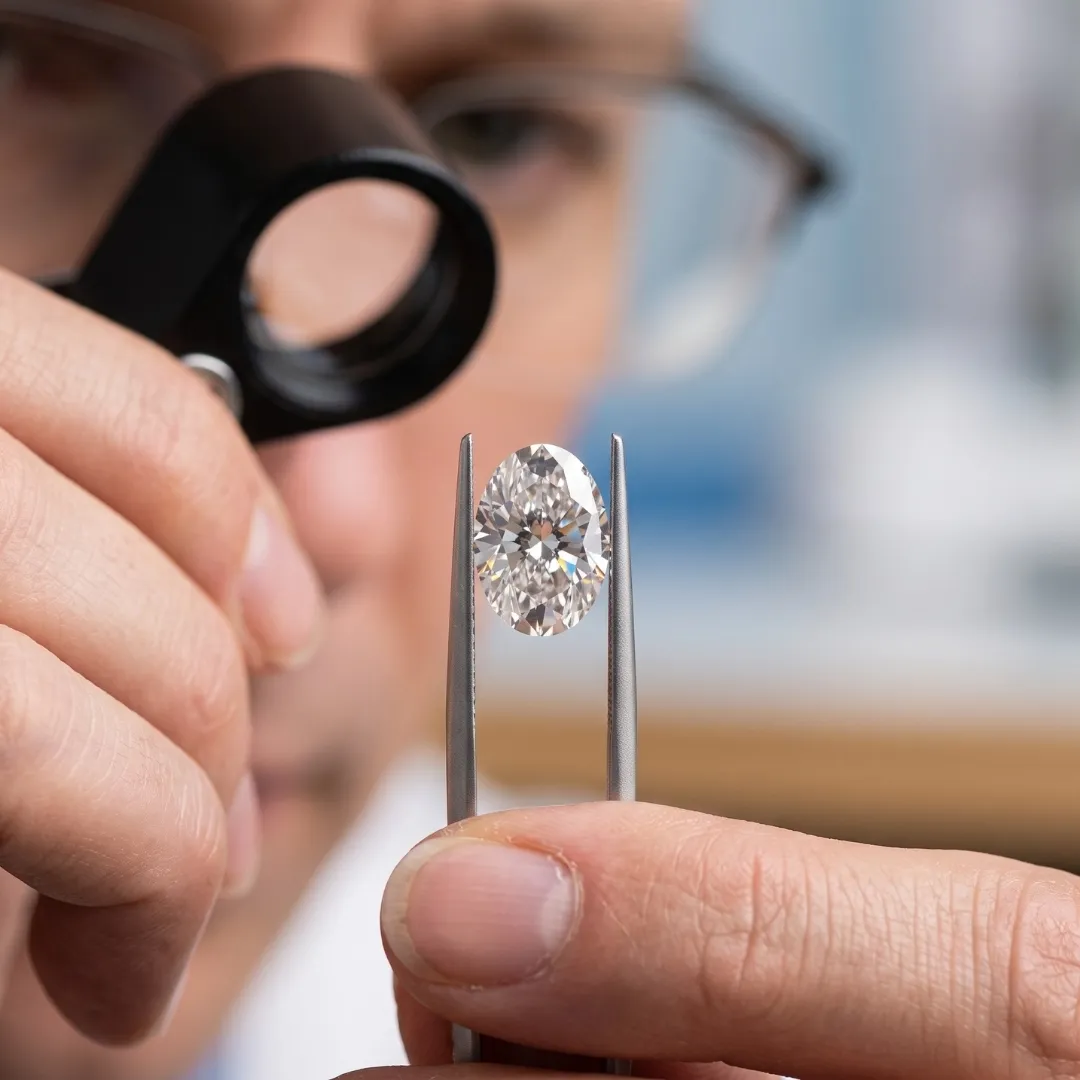
Consumer Buying Drivers at the Retail Counter
Jewelry clients typically self-select their diamond category based on two distinct sets of priorities. Understanding these buying triggers helps your sales team present the right loose stones during the design phase.
| The Lab-Grown Buyer (Value & Scale Focus) |
The Natural Buyer (Rarity & Tradition Focus) |
- Purchasing Power: Wants to maximize center stone size while remaining strictly within a set budget.
- Quality Optimization: Prioritizes securing higher color and clarity grades (e.g., VVS/F-G) at an accessible price point.
- Design Flexibility: Prefers to reallocate budget savings into a more complex, intricate custom mounting or hidden halo details.
|
- Inherent Rarity: Values the fact that their stone is a finite, billions-of-years-old product of nature.
- Traditional Significance: Prioritizes the classic heirloom narrative for engagement rings and multi-generational passing of jewelry.
- Geological History: Appreciates the romanticism and unique geological journey behind mined stones.
|
Sourcing and Supply Realities for Custom Projects
When executing a custom jewelry build, matching the loose stone's physical proportions to the 3D CAD model is critical.
Because lab-grown diamonds are produced continuously, they generally offer highly predictable availability across a wide spectrum of carat weights, shapes, and clarity grades. This broad market availability makes it exceptionally easy to source specific millimeter dimensions quickly for fast-turnaround custom engagement rings.
Natural diamonds can also be sourced successfully through Star Gems' global networks, though matching highly specific custom dimensions or finding exact pairs for three-stone rings may require additional lead time depending on current market availability.
Comprehensive Shape Sourcing
Whether your project calls for natural or lab-grown origins, Star Gems sources loose certified stones across all popular geometric silhouettes to feed your custom CAD pipeline.
Applications in Custom Jewelry Fabrication
The choice between natural and lab-grown diamonds never limits your design capabilities. Our CAD department and master setters work with both stone types interchangeably across every fine jewelry category:
- Custom Bridal Layouts: Crafting classic solitaires, intricate halos, modern hidden halos, and flush-fitting matching bridal sets.
- Custom Wedding Bands: Engineering high-brilliance eternity bands, anniversary rings, and contoured wedding bands.
- Bespoke Fine Jewelry: Developing custom diamond pendants, personalized earrings, tennis bracelets, and milestone fashion pieces.
How Star Gems Helps Retailers Navigate Diamond Sourcing
Independent jewelers partner with Star Gems because we handle the logistics of loose stone sourcing alongside our standard manufacturing support, eliminating the need to coordinate with separate diamond dealers:
- Certified Diamond Access: We source GIA-certified natural diamonds as well as GIA- and IGI-certified lab-grown diamonds.
- Integrated CAD Matching: Our team ensures that your sourced loose diamond is physically measured and matched to your custom CAD file before casting, eliminating setting delays.
- Budget Alignment: We help your team compare multiple natural and lab-grown loose stone options side-by-side so you can present the best financial solutions to your customer.
Frequently Asked Questions
Are lab-grown diamonds real diamonds?
Yes. Lab-grown diamonds are authentic diamonds. They share the identical chemical, physical, and optical properties as mined diamonds and are recognized as real diamonds by the Federal Trade Commission (FTC).
Can Star Gems source both natural and lab-grown diamonds?
Yes. We regularly source loose natural and lab-grown diamonds for independent retailers as part of our full-service custom manufacturing pipeline.
Which diamond type is better for custom engagement rings?
Neither is inherently better; it depends on your customer's values. Lab-grown diamonds are increasingly common for couples looking to purchase a larger center stone within their budget, while natural diamonds remain the preference for clients who prioritize rarity and tradition.
Can Star Gems source certified diamonds?
Yes. We source diamonds backed by independent grading reports from the GIA (Gemological Institute of America) and the IGI (International Gemological Institute) based on your project's specific requirements.
Does Star Gems handle hybrid projects using customer-owned stones?
Yes. If your client wants to use an heirloom center diamond but needs newly sourced natural or lab-grown accent melee for the halo or shank, we can source the matching side stones and manufacture the complete setting.
Streamline Your Diamond Sourcing and Manufacturing
There is no single correct answer when navigating the natural versus lab-grown choice. Success at the counter comes down to understanding your customer’s priorities, explaining their options transparently, and partnering with a manufacturer that can source both seamlessly.
Ready to start your next custom diamond project? Register as a Star Gems retailer today to expand your custom jewelry capabilities without hiring a CAD team, managing multiple vendors, or building an in-house manufacturing department. Gather your design concepts and contact [email protected] to activate our loose diamond sourcing and production support.
 New CAD Request
 Dashboard
 25,000+ Cad Designs
 Sketch design for inspiration
 Image Editing Tool
 GemArt AI
 Loose Diamonds